
Hardware, software, and
a workflow that ties them together.
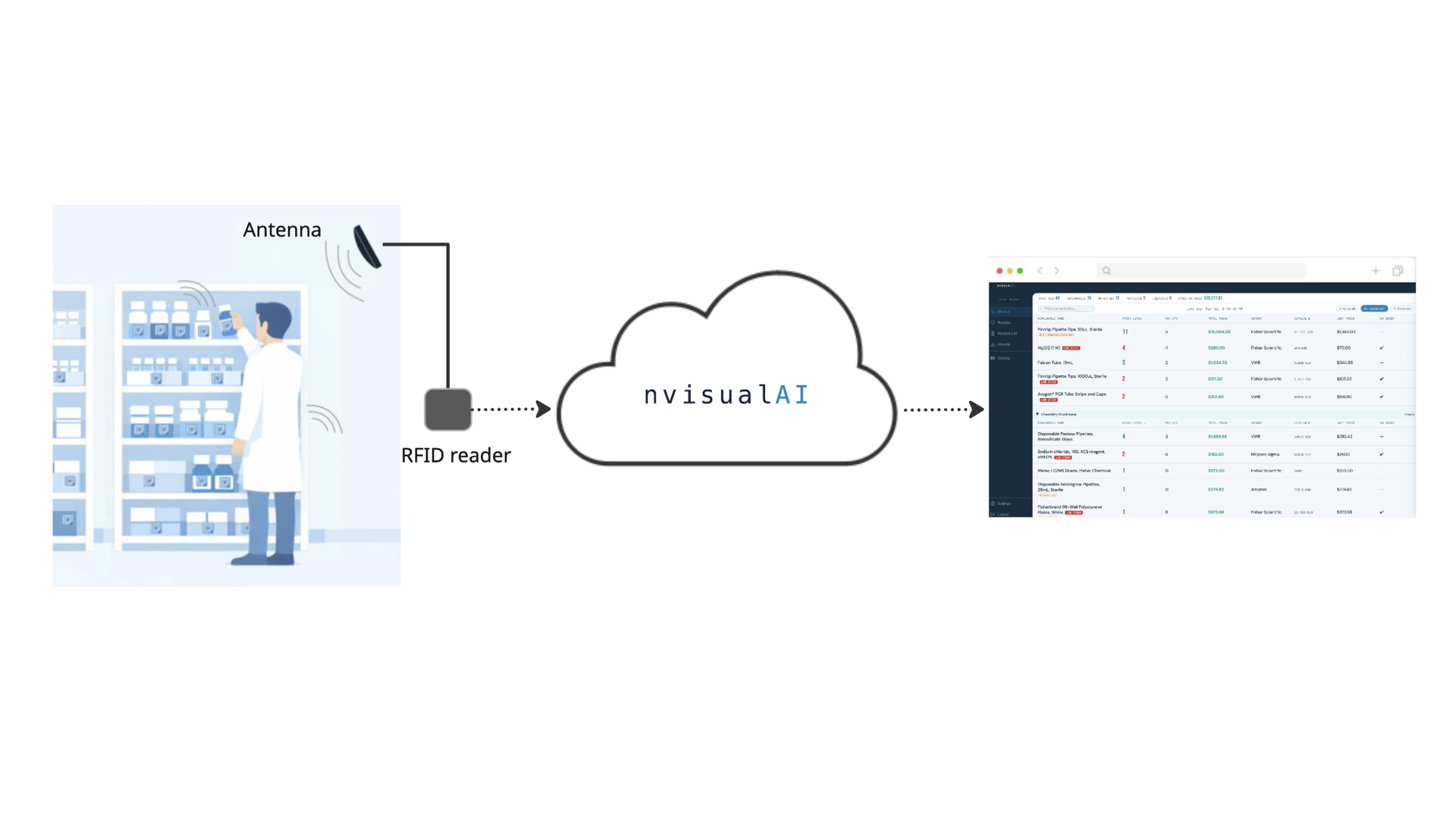
nvisualAI is a complete inventory automation system, not just a software dashboard. It combines industrial RFID hardware with a cloud-connected web application and a guided tag registration process. Here's what each layer does and how they work together.
The one-time step to
link physical to digital.
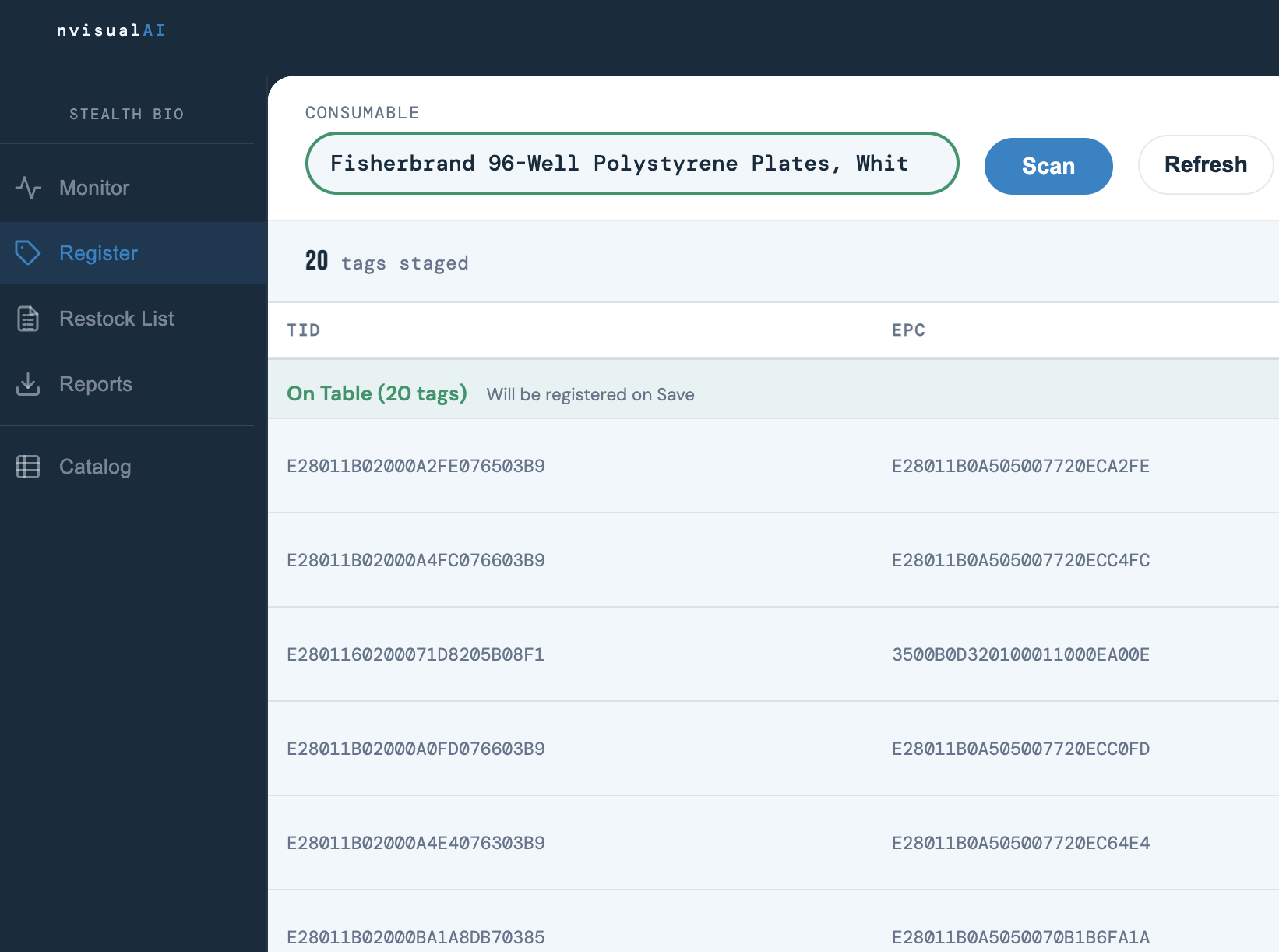
Before the system can track a consumable, it needs to know which RFID tag belongs to which item. This registration process only happens once per item.
- Select an item. Search your catalog by name, number, or vendor in the registration view.
- Place & scan. Position tagged items near the registration reader. Click Scan to detect all tags in range.
- Assign & save. Map tags to catalog items. The link is permanent, and tracking is automatic from here.
- Closing the on-order workflow. Register new tags to an "On Order" item and the flag auto-clears. No manual receiving step needed.
Cloud-connected
intelligence.
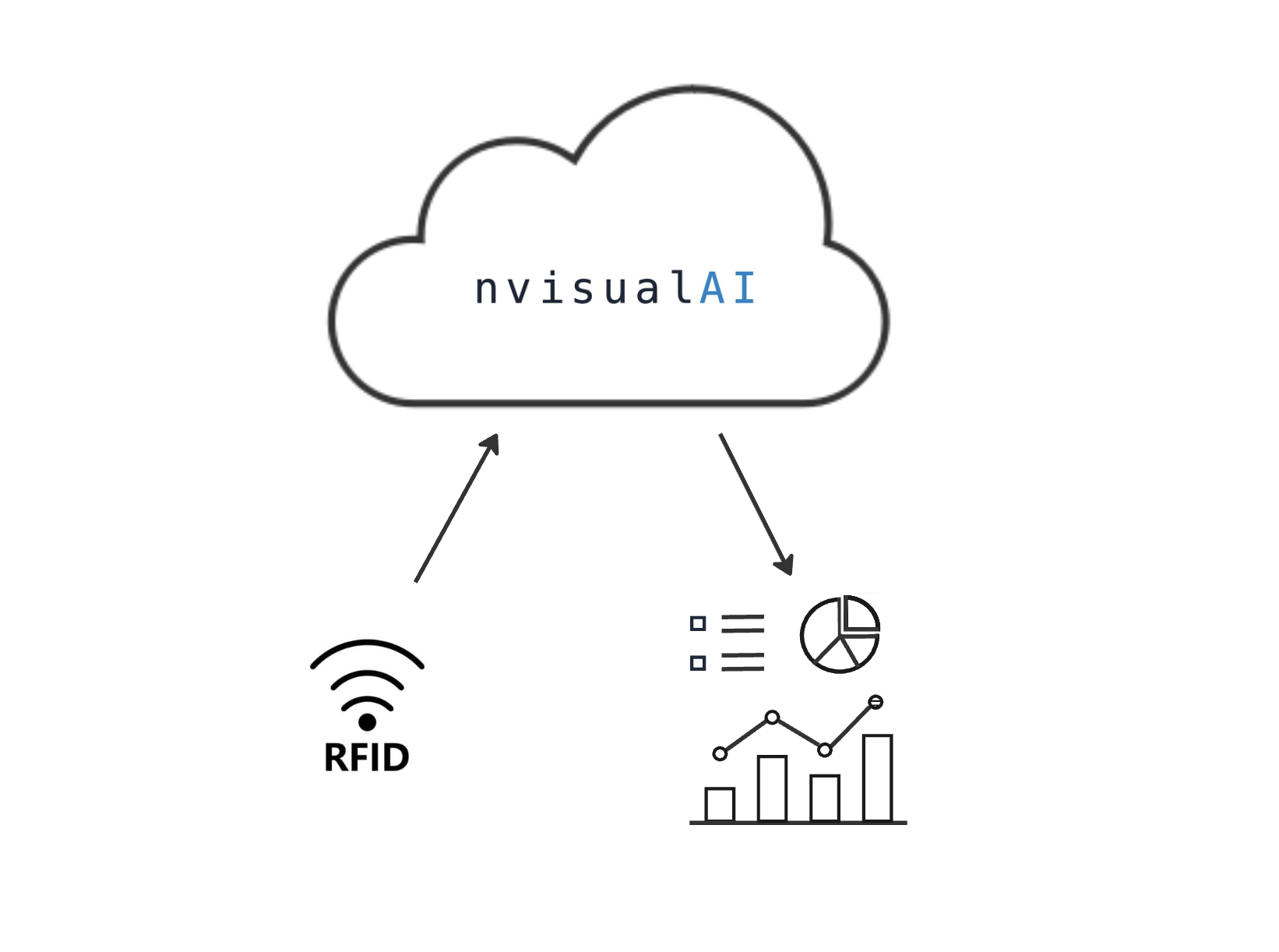
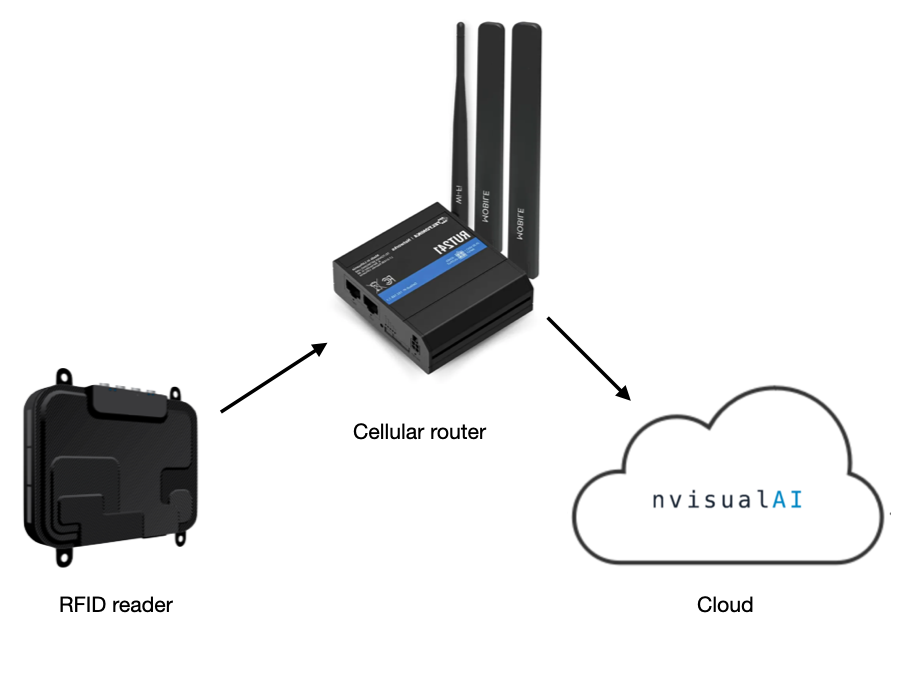
The RFID reader communicates with the nvisualAI cloud platform over a cell network. From radio signals to actionable inventory data, in seconds.
- Reader scans. Scan data (every tag, signal strength, location) is sent to the cloud on a configurable interval.
- Cloud processing. Tag IDs matched to catalog items, locations resolved, anomalies flagged automatically.
- Inventory state. Stock levels, money on shelf and location groupings updated in your browser automatically.
- Automation. Stock below minimum triggers the restock list and pushes to procurement on your schedule.
Initiate restocking process
before stockouts occur.
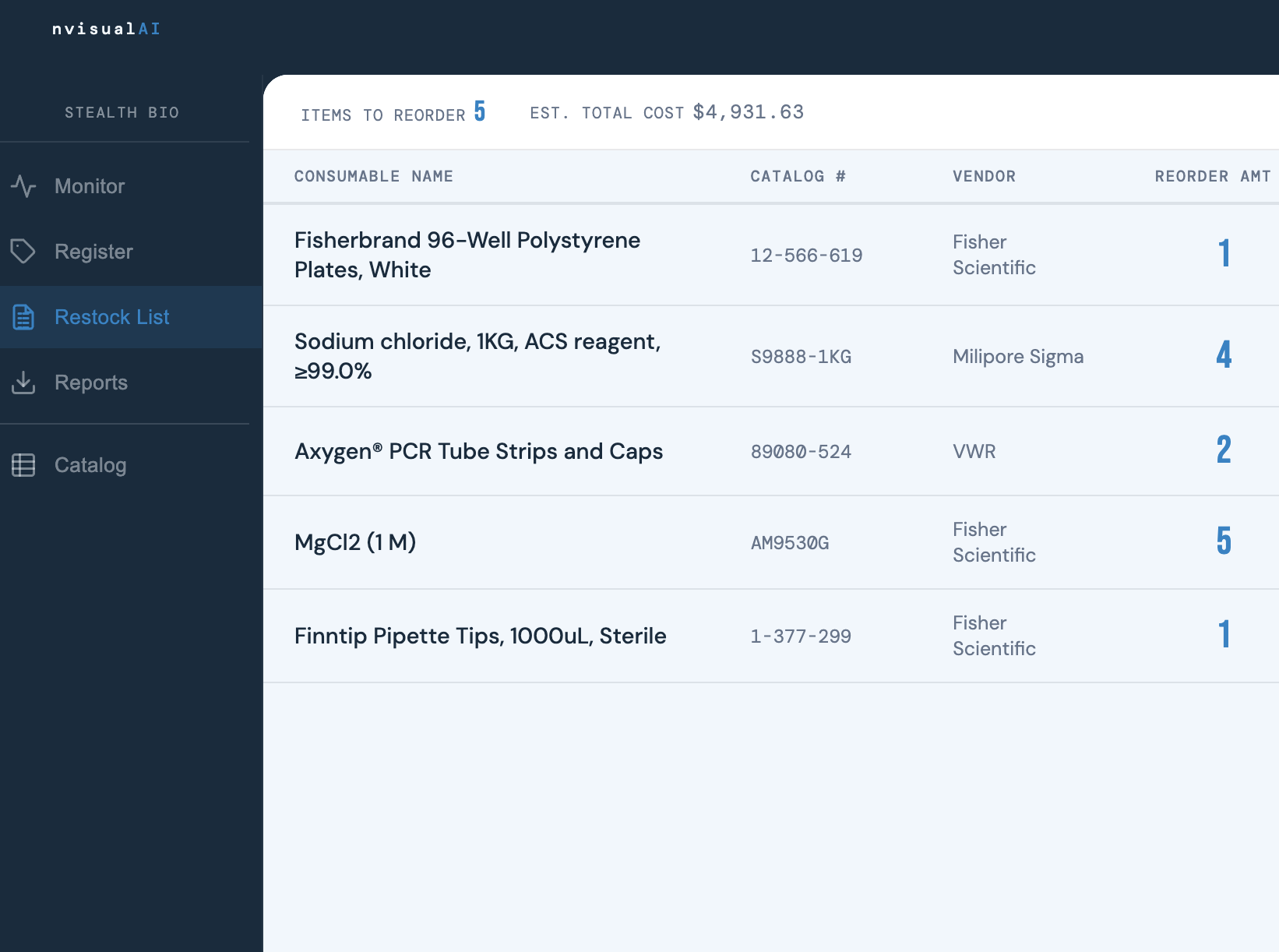
Items below threshold appear automatically with estimated reorder cost. Push to procurement on a schedule, with no manual work.
- Configurable destinations. Email, your procurement platform, or both. Choose what gets pushed and where.
- Scheduled or manual push. Daily, weekly, or "Push Now": your call.
- Push history audit log. Every push is logged. You always know what was sent and when.
- CSV download. Hand off to procurement teams that prefer their own tools.
Network independent
connectivity.
Deploy anywhere instantly without touching customer IT or network infrastructure.
- Zero IT involvement. No firewall rules, VLANs, or Wi-Fi credentials required.
- Faster time-to-value. Plug in, power on, and start collecting data.
- Resilient by design. Operates independently of customer network outages or changes.
Questions we hear
most often.
Who applies the RFID tags?
Your lab ops team applies tags at receiving, when new consumables arrive. It takes about 10 seconds per item and requires no special equipment or training.
We know what you might be thinking: that sounds like it is just trading one manual task for another. But the comparison is not quite right. Counting is something you have to do over and over, forever, with no return other than a number that starts going stale the moment you write it down. Tagging happens once, at the point the item enters your lab, and from that moment on the system tracks it automatically.
Think of it as a one-time investment per item rather than an ongoing labor tax. A box of 960 pipette tips gets tagged once at intake. The system then knows when it arrives, where it lives, how fast it gets used, and when it is running low without anyone ever counting again.
How long does installation take?
For most labs, installation is completed in a single day. Our team visits your site, mounts the RFID readers at each storage location, connects them to the nvisualAI platform, and walks your team through the intake tagging workflow before we leave.
We also help you import your existing consumables catalog during the visit. If you have an Excel file with your current inventory list, that is all we need.
What types of consumables can be tracked?
nvisualAI is designed to track individual boxed or packaged consumables stored on open shelving at ambient temperature. Common examples include pipette tips, microcentrifuge tubes, serological pipettes, cell culture flasks, gloves, and similar packaged lab supplies.
There is an important distinction worth being clear about: the system tracks items at the package or box level, not individual units within a package. A rack of 500 pipette tip boxes can be tracked. A stack of hundreds of loose individual vials inside a freezer cannot.
Does it require IT involvement?
Almost none. The readers themselves never connect to your Wi-Fi. Once commissioned, they communicate exclusively over their own cellular network, completely independent of your facility infrastructure. There are no firewall rules to configure, no VLANs to set up, and no ongoing network access required.
Does it work in cold rooms?
Cold rooms introduce variables including temperature ranges, humidity levels, condensation, and physical layout that can affect reader performance and tag adhesion. Whether a cold room environment is suitable for deployment is something we evaluate in person.
During your free onsite consultation, our team will assess your cold room conditions and give you a clear, honest answer about what is feasible and how it would be set up.
Can it track consumables inside freezers or cold storage units?
Tracking items inside enclosed cold storage units such as freezers and refrigerators is more complex than open-shelf tracking. Metal enclosures, dense packing, extreme temperatures, and RF signal absorption can all affect read reliability in ways that vary significantly between units.
Whether your specific cold storage setup is trackable is something we determine during an onsite assessment. We will look at the unit type, how items are arranged inside, and the surrounding environment before making any recommendation.